
2026 FOSD Global Summit at the United Nations Advances Sovereign Development and Multilateral Partnerships

Convened by PVBLIC Foundation during UNGA81, the fourth FOSD Summit brought governments, UN institutions, family offices and partners together to build investable futures, advance national capacity and formalize three partnerships.
On September 23, 2026, during the 81st Session of the United Nations General Assembly, PVBLIC Foundation convened the fourth UNGA edition of the Family Offices for Sustainable Development (FOSD) Global Summit at United Nations Headquarters in New York. Under the theme “Building Investable Futures Through Multilateral Partnership,” the Summit brought together heads of government, United Nations and multilateral leaders, family offices, philanthropists, business leaders and technology innovators to align capabilities around national priorities.
Guided by the proposition “From Diplomacy to Deployment,” the Summit examined the institutional foundations of sovereign development, human potential, competitiveness, data and technology, resilient prosperity and generational capital. It also provided the setting for three formal partnership agreements involving PVBLIC Foundation and Sanctuary on the Moon, Water & Shark, and the Organisation of Eastern Caribbean States (OECS), through the work of the SDG Data Alliance.
FOSD, a PVBLIC Foundation platform launched in 2020 in collaboration with UN partners, is not simply an investment conference. It is a trusted space where families work together with governments, the United Nations, multilateral institutions and the private sector. Families bring generational experience, expertise, relationships, philanthropy, technology and financial resources; governments bring mandates and national priorities; multilateral institutions bring frameworks, knowledge, continuity and reach; and innovators bring execution and scale. The purpose is to align these capabilities and turn shared objectives into practical institutional action.
Trust, Transformation and Sovereign Priorities

Opening the Summit, PVBLIC Foundation Executive Chairman Sergio Fernández de Córdova described trust as a prerequisite for lasting institutional change: “Transformation is how trust is restored, and trust is the institutional capital that makes transformation possible.” He called for a broader understanding of capital, encompassing not only finance but also human capability, knowledge, technology, natural resources, institutional capacity, relationships and trust. In this view, an investable future is one in which a country can organize those capabilities around its own priorities and turn them into opportunity.
A high-level segment followed with Fatafehi Kinikinilau Lolomana‘ia Fakafānua (8th Lord Fakafānua), Prime Minister of the Kingdom of Tonga; the Honourable Dr. Godwin Friday, Prime Minister of Saint Vincent and the Grenadines; and H.E. Ilana Seid, Chair of the Alliance of Small Island States (AOSIS) and Permanent Representative of Palau to the United Nations. Their remarks reflected the urgent priorities of Small Island Developing States and the partnerships, investment and institutional reforms needed to turn international commitments into practical results, moving from diplomacy to deployment.


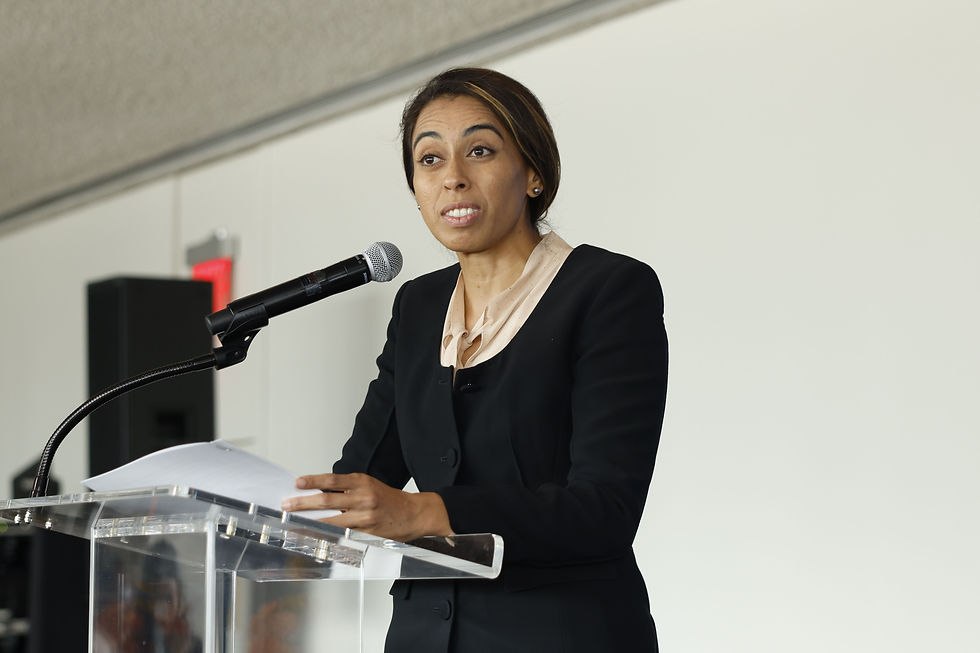
Ivonne A-Baki, candidate for United Nations Secretary-General, also joined the program for a spotlight segment.

Partnerships Formalized at the 2026 FOSD Summit
Three agreements signed at the Summit illustrated distinct dimensions of multilateral collaboration. PVBLIC Foundation and Sanctuary on the Moon agreed to collaborate in promoting an initiative to preserve humanity’s knowledge and cultural heritage for future generations. PVBLIC and Water & Shark formalized cooperation on research concerning responsible wealth stewardship, next-generation family office leadership and multigenerational impact. PVBLIC’s agreement with the OECS, supported through the SDG Data Alliance, addresses regional geospatial data capabilities, cooperation and decision-making for Small Island Developing States. The agreements establish frameworks for further work; they should not be described as completed deployments.
Multilateral Finance and National Competitiveness

“The New Architecture for Deploying Capital,” moderated by Stephen Keppel, President of PVBLIC Foundation, brought together Lisa Kurbiel, Head of Secretariat of the Joint SDG Fund, and Mireia Villar Forner, Deputy Director and Director of External Partnerships and Engagement at the UN Development Coordination Office. The conversation examined how multilateral institutions and private capital are building the next generation of investable nations.

Between panels, Ketan Patel, Chair of Force for Good, launched its organization’s latest report, a significant moment for longstanding partners including PVBLIC Foundation and the FOSD network. The report finds that capital, proven solutions, technology and human capability are abundant, but are not reaching the world’s development needs. Patel then joined “Building Competitive Economies for an Age of Transformation,” moderated by Ana Carcani Rold, CEO of Diplomatic Courier, with Pamela Coke-Hamilton, Executive Director of the International Trade Centre. The discussion looked at how governments, multilateral institutions and private capital can strengthen national competitiveness amid technological disruption, geopolitical change and evolving global markets.

The practical question of how to move from principles to projects was the focus of “From Global Principles to Investable Projects: Building a Pipeline for Resilient Prosperity,” moderated by Dr. Simon Reid-Henry, Research Professor at the Peace Research Institute Oslo (PRIO). Laura Chinchilla Miranda, Former President of Costa Rica and President of Club de Madrid; Dr. Hyginus “Gene” Leon, Executive Director of the Development Bank for Resilient Prosperity/Nature Bank; Stefan Löfven, Prime Minister of Sweden from 2014 to 2021 and member of Club de Madrid; and H.E. Helder Costa, Representative of the Democratic Republic of Timor-Leste, joined the panel.

Education, Health and Human Potential

Moderated by Jayashri Wyatt, Chief of Human Rights and Outreach Programmes at the United Nations Department of Global Communications, this panel brought together Chris Purifoy, CEO and Co-Founder of Learning Economy Foundation, and George Tomeski, CEO of Helfie AI. The conversation focused on sovereign education data, technology transfer and the importance of education infrastructure to a country’s wider development and investment readiness. It also drew on the work of Learning Economy Foundation and Helfie AI, both partners of the Summit, which share a commitment to turning emerging technology into systems, in learning and in health, that reach people at scale.
In a spotlight on implementation, Dr. Bernard Mohammed Doro, Nigeria’s Minister of Humanitarian Affairs and Poverty Reduction, outlined a pathway for advancing education through coordinated government leadership, institutional partnerships and technology-enabled delivery. The intervention connected the Summit’s discussion of human potential to the practical challenge of preparing national education initiatives for implementation, with emphasis on defined outcomes and the capabilities needed to support them. The spotlight presented a pathway for further development, not a claim that financing had already been disbursed or a nationwide deployment completed.

Small Island Developing States, Data and Resilient Prosperity

The program continued with a series of spotlights that widened the lens. Dror Benshetrit, Founder of Supernature Labs, invited participants to consider “What If Cities Were Designed for Life?” through a video presentation. Dr. Dan Brenner, Executive Director of the United Nations International School (UNIS), presented FUNKE AI: Expanding Opportunity, Transforming Futures, with video and a presentation. In “Can We Save Tuvalu?”, a video segment moderated by Ashaki Goodwin, Director of Government Affairs at PVBLIC Foundation, H.E. Tapugao Falefou, Ambassador and Permanent Representative of Tuvalu to the United Nations, brought the urgency facing island nations to the room.


Family Philanthropy and Generational Capital

The afternoon turned to the role of families themselves. In “Family Philanthropy Without Borders,” moderated by Luke Kincaid, Board Member of Phineo, Corina Gardner, CEO of the Irene Pritzker Foundation; Cathryn Clüver Ashbrook, Executive Vice President of the Bertelsmann Foundation; and Theresa Schieber, Vice President, Advisory, at Rockefeller Philanthropy Advisors, discussed how family foundations are building trusted international partnerships to strengthen institutions and create lasting global impact.

“Generational Capital, National Impact,” moderated by Yasmin Almostehy, Founder and Managing Director of Beacon Hills Management Consultancy, explored how multigenerational family enterprises are partnering with governments and multilateral institutions to shape resilient economies and long-term prosperity. Mahra Rashed Al Suwaidi, CEO of Horizon Energy; Ahmed Nasser Al Nowais, Founder and CEO of Annex Investments; and Dr. Stephen Shaya, Managing Director of Akkad Holdings, shared their perspectives. Akkad Holdings, a family office and partner of the Summit, brought that multigenerational view to the discussion.

Two further conversations broadened the idea of legacy. In “The Enduring Mandate,” moderated by PhDr. Don Marco de Guadamillas y Cortés, Grand Chancellor of the Imperial House of Brazil and Director of the Historical Institutions and Families Programme at FOSD, Princess Jahnavi Kumari Mewar of the House of Mewar, India, reflected on how historical families and institutions have preserved purpose, navigated centuries of change and continue to inspire new generations. A fireside chat on “New Models of Nation Building” brought together Danial Siddiqui, PVBLIC Global Advisor; John Lowery, Tribal Chairman of the Lumbee Tribe; and Caleb Malcolm, Chief Operating Officer of Lumbee Holdings.
The discussion explored what sovereignty makes possible when a community can align institutional governance with its own long-term priorities. Following the Lumbee Tribe’s federal recognition in 2025, Tribal Chairman John Lowery, Caleb Malcolm and PVBLIC Global Advisor Danial Siddiqui considered opportunities across education, health, technology, enterprise and data capabilities. PVBLIC’s developing relationship with the Tribe is intended to support Tribal priorities through formal institutional cooperation; proposed initiatives should not be represented as completed deployments.

Sovereignty, Nation Building and Enduring Institutions
The Summit also served as the setting for three partnership agreements:

In a spotlight on “Preserving Humanity’s Legacy,” Sébastien Carassou, PhD, Scientific Director of Sanctuary on the Moon, and Romain de La Rochefordière, Director of Strategic Partnerships & Global Affairs, discussed how international collaboration is creating a permanent archive of human knowledge, culture and achievement beyond Earth. The initiative, developed in partnership with UNESCO and under the High Patronage of the President of the French Republic, has been selected by NASA to be delivered to the lunar surface in support of the Artemis program. On stage, PVBLIC Foundation and Sanctuary on the Moon signed a Memorandum of Understanding to promote the initiative and inspire global engagement. “What we choose to preserve says something profound about who we are and what we believe matters for the generations that follow us,” said Sergio Fernández de Córdova.

A fireside conversation with Harsh Patel, Founder and Global CEO of Water & Shark, and Sujit Nair, Managing Director, led into another signing. The agreement establishes a collaboration focused on research tied to responsible wealth stewardship, next-generation family office leadership and the role of private capital in sustainable development, a natural fit for Water & Shark, a Summit partner that advises family offices on preserving capital across generations. “We look forward to developing landmark research and publications that examine how family offices can evolve into enduring institutions of responsible capital stewardship, sustainable leadership, and multi-generational impact,” said Harsh Patel.

The third agreement was signed during a fireside chat between the SDG Data Alliance and the Organisation of Eastern Caribbean States (OECS), moderated by Dr. Eva-Marie Muller-Stuler, Partner, Data & AI at EY, with Dr. Greg Scott, Executive Director of the SDG Data Alliance, and Dr. Didacus Jules, Director General of the OECS. The Memorandum of Understanding addresses the challenges faced by Small Island Developing States through innovations in geospatial data, regional cooperation and financing, in line with the Antigua and Barbuda Agenda for SIDS (ABAS) and the UN Integrated Geospatial Information Framework (UN-IGIF). “Small states rarely lack data; too often it is in the wrong place, the wrong format, or too late for decisions,” said Dr. Jules.

Nearly Fifteen Years of Institutional Partnership
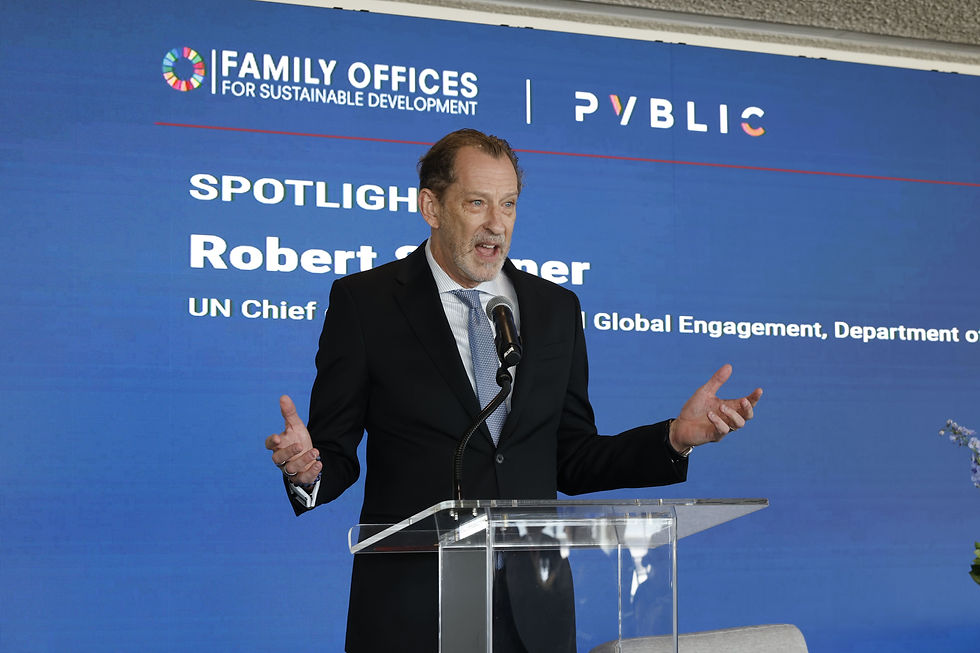
Robert Skinner, Chief of Partnerships and Global Engagement at the United Nations, reflected on the importance of sustained collaboration and the institutions that connect public purpose with practical action. His remarks also recognized PVBLIC Foundation’s longstanding work with the United Nations as the Foundation approaches its fifteenth anniversary in December 2026.

The Summit’s closing program included remarks by H.E. Vāinga Tone, Permanent Representative of the Kingdom of Tonga to the United Nations, and Kerry Bannigan, President of the Board of PVBLIC Foundation. Sergio Fernández de Córdova, who delivered the opening keynote and guided much of the program as master of ceremonies, and Kerry Bannigan served as the Summit’s co-conveners. The closing returned to the importance of long-term partnerships and the responsibility to carry the day’s conversations into continued institutional work.

What Happens After the Summit
The 2026 FOSD Global Summit was designed around a simple question raised in the opening keynote: “What do I bring, what am I missing, and what could we build together that none of us could build alone?” Across sovereign priorities, education and health, development finance, data, philanthropy and generational leadership, the day demonstrated why no single institution holds every capability required for implementation. As Fernández de Córdova concluded: “The measure of this Summit will not be how many people were in the room, how many panels we held, or even how good the conversations were. It will be what happens because we were there together.”
PVBLIC Foundation extends its appreciation to the partners of the Summit: Water & Shark, Esri, Learning Economy Foundation, Helfie AI and Akkad Holdings. Their commitment to turning capital, knowledge and technology into lasting impact helps families, governments and multilateral partners build prosperity together.
About FOSD
Family Offices for Sustainable Development (FOSD) is a PVBLIC Foundation platform launched in 2020 in collaboration with United Nations partners to bring families together to advance sustainable economic development. FOSD connects family offices, the organizations that manage families’ wealth and investments, with governments, United Nations agencies, and development partners, helping translate long-term capital, business expertise, technology, and networks into collective action. Guided by its founding principles, Educate, Engage, Activate, FOSD has a global network of more than 1,400 family office leaders.
About PVBLIC Foundation
PVBLIC Foundation is a global institution transforming how societies build the systems that enable resilient and future-ready development. Operating at the intersection of diplomacy, development, and innovation, PVBLIC serves as a trusted platform connecting governments, the United Nations, global family offices, and the private sector to design and implement scalable development frameworks. Through its four interconnected pillars of Nature, Technology, Capital, and Multilateralism, PVBLIC builds the infrastructure of the future by advancing environmental resilience, mobilizing catalytic capital, transferring technology, and convening high-level partnerships that drive measurable global impact. The foundation has managed programs and partnerships that have reached more than one billion people in 125 countries. Our mission is to mobilize action for sustainable and economic development and establish practical frameworks that translate policy into implementation.
This article was written by Bárbara González, Communications Coordinator, and Sergio Fernández de Córdova, Founder & Executive Chairman of PVBLIC Foundation, an organization working at the intersection of Nature, Technology, Capital, and Multilateralism in partnership with sovereign governments, multilateral institutions, development finance organizations, and global family offices.
→ Explore PVBLIC’s work at pvblic.org


Comments