
PVBLIC Foundation in the UK: Advancing Health and Education Through Global Partnerships

When it comes to health and education, a lot of what the world needs already exists; however, getting it to the countries and communities that need it most can be challenging.
That distance, between what exists and what reaches people, is where much of the world's most important work still has to be done. It is also the conversation PVBLIC Foundation brought to London recently, as part of the expansion of its work into the United Kingdom.
Health is where the gap is easiest to see. Across diagnostics, digital health, AI, data, life sciences and preventative care, some of the world's most consequential advances are being developed today. Yet many of the countries and communities that could benefit most continue to face significant barriers to accessing, financing and implementing them. The WHO and the World Bank estimate that 4.6 billion people worldwide still lack access to essential health services, and the WHO projects a shortfall of 11 million health workers by 2030.
Education faces a parallel challenge. Technology, artificial intelligence and the requirements of the workforce are advancing rapidly, while education systems are often constrained by fragmented infrastructure, disconnected initiatives and models that were not designed for the pace of change now underway. Data shared by UNESCO shows that only 58% of students reach minimum reading proficiency by the end of primary school, and that fewer than half of primary schools worldwide have adequate infrastructure or internet access. In low and lower-middle income countries, UNESCO estimates a financing gap of US$97 billion a year to reach national education targets by 2030. And modernization cannot come at the expense of national ownership. Governments need the ability to adopt new technologies and capabilities while keeping authority over their education policies, curriculum, institutions and data.
In both fields, the question that matters is how innovation reaches the countries and systems where it can deliver meaningful impact, on terms those countries set for themselves.
Starting with the Country
Global Health Futures and Transforming Global Education are PVBLIC-led platforms for helping close these gaps, and both begin in the same place: with country priorities. From there, PVBLIC brings together the technology, data, infrastructure, expertise, capital and implementation capabilities required to address them.
Over the past year, Global Health Futures (GHF) has brought together governments, institutions, technologies and implementation partners to create practical pathways for moving innovation into countries and health systems where it can deliver meaningful impact, with a particular focus on technology transfer and deployment across Small Island Developing States and developing economies. The Transforming Global Education Program (TGE) approaches education as critical national infrastructure, connecting learning, technology, skills and workforce development across the full learner journey, from early education through higher education, employment and lifelong learning.


Convening is the method that connects both platforms. Bringing leaders from different sectors together is how priorities, capabilities, and capital begin to line up around practical action. “Progress on health and education depends less on invention than on alignment. When governments, institutions, innovators and capital come together around priorities that countries have defined for themselves, solutions that already exist can finally reach the people they were meant for. That is the purpose of our convenings. It is where trust is established between nations and institutions, and where national ambitions are matched with the expertise and investment needed to fulfil them,” says Kerry Bannigan, President of the Board of PVBLIC Foundation.
Why the United Kingdom
The United Kingdom brings together a unique concentration of health innovation, research, life sciences, technology, finance and international development expertise. Its universities, education institutions and education technology sector, alongside deep relationships across the Commonwealth and the wider multilateral system, offer significant opportunities to connect UK capabilities with country-led priorities globally.
For PVBLIC, the week was about sharing our work with UK leaders and partners, what was already underway across the Foundation, learning how UK institutions could be involved, and exploring how we could collaborate with them. It is a conversation PVBLIC seeks with leaders in every country where it works, and this time it took place in London.
"Over four days, we brought together people who can help turn shared priorities into action, from government and Commonwealth stakeholders to family offices, educators, health innovators and business leaders. We signed a partnership with NCUK and advanced conversations about how expertise, technology and capital can work together to support countries and communities. The opportunity now is to build on those relationships and carry that momentum into implementation,” said Sergio Fernández de Cordova, Executive Chairman of PVBLIC Foundation.
The Week in London
From 12–15 October, PVBLIC’s London engagements combined leadership dialogues and a parliamentary briefing with bilateral meetings, family-office discussions and partner follow-ups. Across four days, the team engaged government and Commonwealth stakeholders, educators, health innovators, investors, philanthropists and industry leaders—building relationships and identifying practical opportunities to work together.
Tuesday, October 13: Transforming Global Education Leadership Dialogue
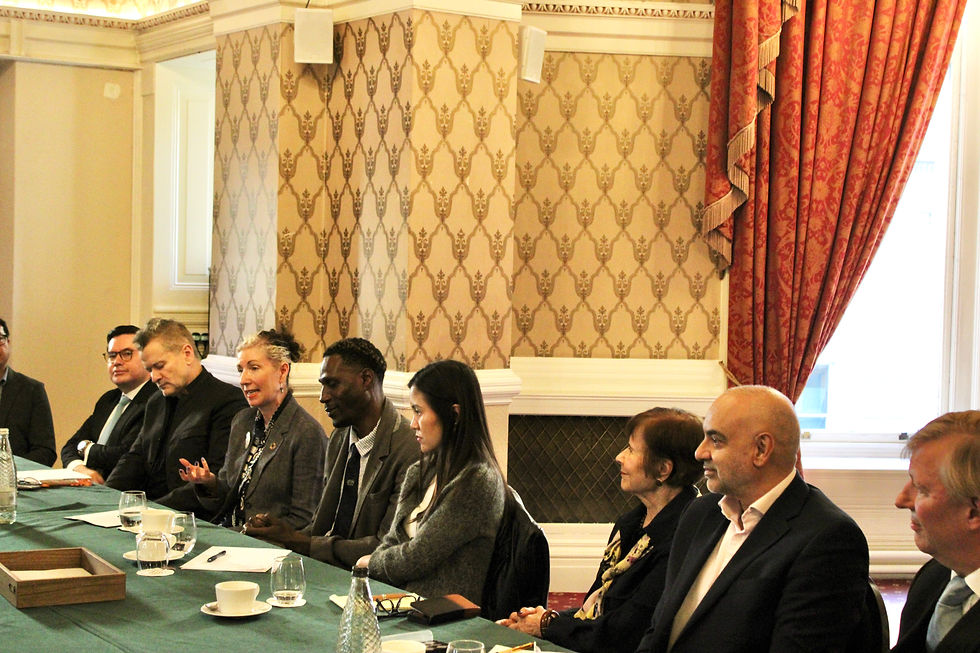
Under the theme ‘’Building the Infrastructure for Lifelong Learning’’, a select group of leaders from government, education, technology, business, finance, philanthropy and implementation explored a central question: how do we build education systems that can continuously prepare people, institutions and economies for a world that is changing faster than traditional education models can adapt? The discussion covered sovereign education infrastructure, curriculum modernization, responsible technology and AI deployment, skills and workforce alignment, and the pathways from individual initiatives toward scalable national systems. Participants brought perspectives from more than nine countries, giving the dialogue an international depth that reflected PVBLIC’s approach to collaboration. Discussions emphasised expanding access while respecting culture and national priorities, making personalised learning more accessible, and connecting education with skills and economic opportunity in learners’ home countries.
The dialogue also saw PVBLIC Foundation sign a partnership agreement with Northern Consortium UK (NCUK), marking a new strategic collaboration. NCUK is an international education pathway provider connecting students with higher education opportunities through its global network of universities and study centres.

The signed Memorandum of Understanding brings together NCUK’s decades of experience and global network of universities and study centres with PVBLIC’s work connecting governments, technology, capital and implementation partners. Through the Transforming Global Education Program, the organisations will explore opportunities to strengthen international education pathways, advance curriculum development and widen access to learning and skills—supporting opportunity both at home and internationally.

Tuesday, October 13: Global Health Futures Leadership Dialogue

Themed ‘Building the Next Generation of Health Systems’, the dialogue brought together a select group of leaders from government, multilateral institutions, healthcare, technology, finance, philanthropy, research and implementation to explore a central question: how do we move breakthrough health innovation from where it is created to where it can have the greatest impact? The discussion showcased technologies and capabilities already contributing to this work and looked at how governments, multilateral institutions, innovators and capital partners can work together to accelerate technology transfer, implementation and access. It was intended as a working conversation among leaders who can help shape, support and participate in the next phase of Global Health Futures. A central theme was the shift towards prevention and helping people lead healthier lives. Participants explored how digital health, sports science, community organisations and sustainable financing can work together to widen access and support national health priorities. The emphasis was on connecting existing capabilities with the partners and infrastructure needed to put them into practice.
Wednesday, October 14: Commonwealth Reception at St James’s Palace
PVBLIC Foundation Executive Chairman Sergio Fernández de Cordova and President of the Board of Directors Kerry Bannigan attended a reception hosted by Their Majesties The King and Queen at St James’s Palace, held in advance of the Commonwealth Heads of Government Meeting 2026. The engagement reflected the Commonwealth’s importance to PVBLIC’s growing UK presence and its work connecting education, health and sustainable development priorities across countries and communities.
Thursday, October 15: Leadership Briefing at the House of Lords

An invitation-only afternoon briefing brought together a select group of leaders from government, Parliament, finance, media, philanthropy, technology, academia, international development and civil society. PVBLIC introduced its work to UK leaders, including what was already underway, and explored how the UK's institutional strengths can connect with country-led priorities around the world. Megan McAstocker, Director of Events, spoke on what PVBLIC has done through its events and why it believes in the power of convenings, while Kerry Bannigan and Sergio Fernández de Córdova covered the Foundation's mission, key programs and vision for the future.
Beyond the Formal Programme
Much of the week’s work continued through bilateral meetings, working breakfasts, dinners and smaller gatherings. The PVBLIC team met with family-office principals, philanthropic networks, investment professionals and prospective partners to explore how private capital, expertise and long-term relationships could support country-led development.
Discussions with government representatives and family-office networks explored philanthropy, family wealth stewardship and potential implementation partnerships. These exchanges identified opportunities to connect UK and international networks with PVBLIC’s programmes, grounded in trusted relationships, shared priorities and practical delivery.
Conversations across industries explored sustainability, media and multilateral collaboration, alongside the role of esports, digital skills and community engagement in education and wellbeing. Exchanges following the health dialogue examined connections between prevention, technology, community infrastructure and financing.
These smaller settings gave participants space to deepen relationships, share specific needs and identify where their work could connect. Introductions, requests for programme materials and discussions about future workshops helped translate the formal dialogues into practical next steps.
References
World Health Organization and World Bank. Tracking Universal Health Coverage: 2025 Global Monitoring Report. December 2025. Publication | Press release. Figure cited: 4.6 billion people worldwide lack access to essential health services.
World Health Organization. Health workforce. Link. Figure cited: projected shortfall of 11 million health workers by 2030.
UNESCO. Policy brief on the education financing gap. 2025. Link. Figure cited: US$97 billion annual financing gap for low and lower-middle income countries to reach national SDG 4 targets by 2030.
UNESCO. Global Education Monitoring Report 2024. Link. Figure cited: 58% of students reach minimum reading proficiency by the end of primary school.
UNESCO World Education Statistics. 2024. Link. Figure cited: fewer than half of primary schools worldwide have adequate infrastructure or internet access.
This article was written by Bárbara González, Communications Coordinator, and Sergio Fernández de Córdova, Founder & Executive Chairman of PVBLIC Foundation, an organization working at the intersection of Nature, Technology, Capital, and Multilateralism in partnership with sovereign governments, multilateral institutions, development finance organizations, and global family offices.
→ Explore PVBLIC's work at pvblic.org


This was a good read. I found the information useful and easy to follow. I also stumbled upon CroreBet while browsing different websites. Thanks for sharing your thoughts!