
The Infrastructure Nobody Talks About
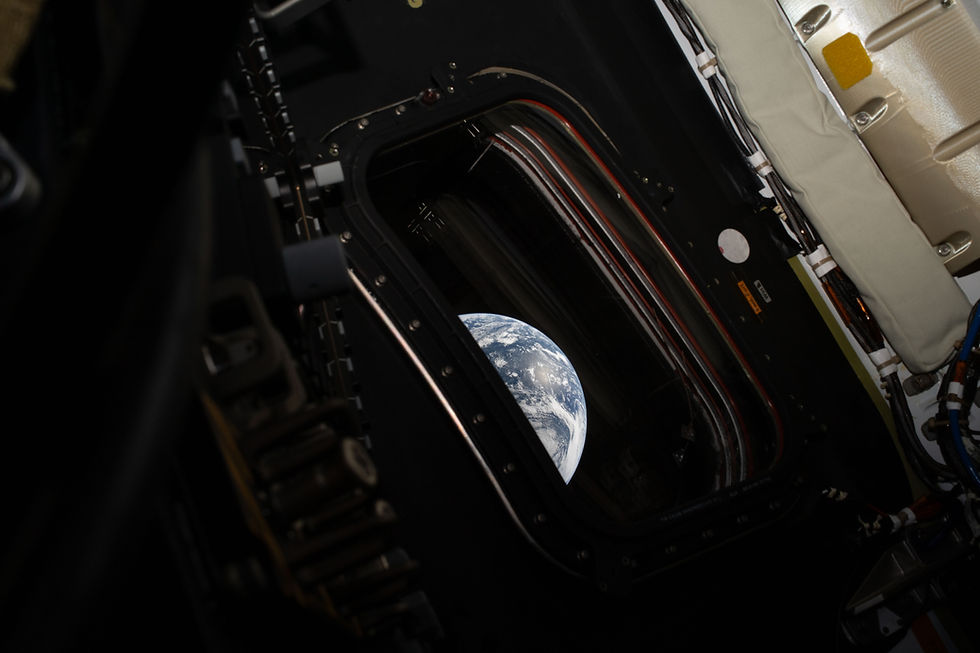
Every time you check the weather before leaving the house, navigate to a meeting, or see a brand claim its supply chain is deforestation-free, something invisible is doing the work. Not an app. Not a server farm. A satellite, or more likely several, orbiting hundreds of kilometers above Earth, part of a system most people have never thought about and almost no one is talking about protecting.
Here is the thing about invisible systems: they only become visible when something goes wrong. And with satellite numbers projected to rise from roughly 15,000 today to as many as 100,000 by 2030, the window to shape how this shared frontier is governed, before the consequences become impossible to ignore, is narrowing faster than most people realize.
The question is not whether this conversation needs to happen. It is who needs to be in the room when it does.
Every June, the Cannes Lions International Festival of Creativity brings together the world's most influential leaders across advertising, marketing, media, technology, entertainment, and design. It is not simply a festival. It is the place where the global creative and communications industry collectively decides what ideas are worth pursuing, what challenges are worth engaging with, and what stories are worth telling. The brands, agencies, and cultural leaders who gather on the French Riviera every year shape what enters mainstream consciousness, and what doesn't. Which means the conversations that happen at Cannes have consequences that extend far beyond its beaches.

That is precisely why, for the first time, the global space conversation is coming to Cannes Lions. And why the two organizations bringing it there are not space agencies or aerospace companies, but a United Nations institution and a global foundation built on the power of storytelling.
The challenge facing space is not technological. The technology already exists. The challenge is building the frameworks, partnerships, and public understanding required to ensure its benefits remain accessible to all. The future of space will not be shaped by engineers alone. It will be shaped by governments, multilateral institutions, investors, creators, educators, and the broader public. Bringing those communities together is precisely the role PVBLIC was created to play.
We protect what we understand, and we invest in what we value.

Space-based systems already contribute to more than 40% of the United Nations Sustainable Development Goals. Satellite data monitors crops in Kenya, tracks illegal deforestation in the Amazon, predicts where the next flood will hit, and underpins the financial infrastructure the global economy runs on. Yet for most people, space remains abstract, largely unbranded, and poorly understood. The systems that govern it, and the institution that safeguards its shared use, are almost entirely invisible to the public. Space is not simply a frontier. It is shared infrastructure for life on Earth.
That invisibility has consequences. The governance decisions being made right now about access, stewardship, orbital resources, data rights, and participation in the space economy will shape civilization for generations. They are being made in multilateral forums that much of the creative industry, the very people who influence what society pays attention to, has never engaged with. They are being made in multilateral forums that the creative industry, the very people who decide what the world pays attention to, has never engaged with.
This is not a space problem. It is a storytelling problem. We only protect what we understand. We only fight for what we feel belongs to us. And space, for most people, still feels like someone else's frontier.
Storytellers are not just the messengers. They are the architects.
There is a temptation to think of the creative industry's role here as translational, taking a complex technical issue and making it legible to a wider audience. But that framing undersells what is actually possible.
The stories a culture tells about a frontier determine who gets to shape it. If space governance becomes relevant to brand leaders, it becomes relevant to boardrooms. If it becomes relevant to boardrooms, it becomes relevant to policy. And if it becomes relevant to policy, the frameworks being built right now, governing access, equity, and shared use of this shared frontier, will be shaped by a much broader and more representative set of voices.
That is not a small thing. That is exactly what is at stake. And it is exactly the kind of problem that Cannes Lions was built to address.
Building the Coalition Required for the Next Frontier

PVBLIC Foundation operates at the intersection of diplomacy, development, innovation, and multilateral cooperation, connecting governments, the United Nations system, family offices, and the private sector to transform global challenges into platforms for action.
Through four interconnected pillars of Nature, Technology, Capital, and Multilateralism, it works to build the conditions for real change, with programs and partnerships reaching more than a billion people across 125 countries.
Space is one of the few domains where Nature, Technology, Capital, and Multilateralism converge simultaneously. It enables environmental stewardship, powers digital infrastructure, creates new economic opportunities, and requires international cooperation at a global scale. Few issues better illustrate the interconnected challenges and opportunities that will define the century ahead.
Space sits at the center of these four pillars. It is a nature question, because satellite data is among our most powerful tools for monitoring and protecting the planet's ecosystems. It is a technology question, because the digital infrastructure modern economies depend on runs through orbit. It is a capital question, because the space economy is one of the fastest-growing frontiers for investment, with decisions about access and equity being made right now. And it is a multilateralism question, because no single government or company can govern this shared frontier alone.
For PVBLIC, the question is not whether space matters. The question is whether the institutions responsible for shaping its future are engaging a broad enough coalition to ensure its benefits remain accessible to all.
It was this alignment, between PVBLIC's mission and the urgency of the space governance conversation, that led, in September 2025, to a formal partnership with the United Nations Office for Outer Space Affairs, through a Memorandum of Understanding signed at the margins of the 80th Session of the United Nations General Assembly.
UNOOSA is the only United Nations entity exclusively dedicated to ensuring the peaceful, safe, and equitable use of outer space. It provides the governance frameworks that allow space science and technology to benefit all countries, particularly those historically excluded from the space economy. It is, in the most precise sense, the institution humanity has built to protect this shared frontier, one that has long needed a broader audience, and a different kind of partner, to make its work visible.
Cannes Lions is where that work becomes visible. Not because it is a convenient venue, but because it is where the people who shape culture gather, and culture is what makes people care. PVBLIC and UNOOSA are not coming to Cannes to present space to the creative industry. They are coming to argue that the creative industry is essential to the future of space, and to issue a direct invitation into a conversation that has been happening without them for too long.
Space is not an aspirational framing. It is not a metaphor. It is the infrastructure the global economy already runs on, and the rules governing who benefits from it are being written right now.
The barrier has never been technology. The satellite is already up there. The data already exists, open, available, and largely unused by the creative industry. What is missing is the cultural moment that makes this feel urgent, relevant, and worth engaging with. Cannes Lions 2026 is that moment.
The future of space will not be determined solely by those who build the technology. It will be shaped by those who help society understand its value, strengthen the governance frameworks that protect it, and ensure its benefits remain accessible to all. The conversation is no longer about whether space matters. The conversation is about who will help shape what comes next.
The frontier is shared. The invitation is open.
This article was written by Bárbara González, Communications Coordinator at PVBLIC Foundation, and Sergio Fernández de Córdova, Founder & Executive Chairman of PVBLIC Foundation, an organization working at the intersection of Nature, Technology, Capital, and Multilateralism in partnership with sovereign governments, multilateral institutions, development finance organizations, and global family offices.
This article is part of PVBLIC's work ahead of Cannes Lions 2026, where the Foundation and the United Nations Office for Outer Space Affairs (UNOOSA) are bringing the global space governance conversation to the creative industry for the first time.
→ Explore PVBLIC's work at pvblic.org


This post really explains how infrastructure works behind the scenes and how much modern life depends on systems people usually ignore. It made me think about how everything feels connected even when we do not notice it. During a busy school period, I remember feeling overwhelmed with deadlines and I had used online teas exam help while trying to manage my study load. It shows me that strong systems, whether physical or personal, help people stay balanced and keep moving forward.