
Cumbre de Impacto Iberoamericano Marks a Decade at the UN and Honors Enrique Riquelme with the 2026 Iberoamerican Impact Award

With Spain as Focus Country, the 2026 edition convened leaders from government, multilateral institutions, business, civil society, innovation, and culture under the theme "Iberoamerica Transforms: Energy, Oceans and Intelligence for a Shared Future"
A decade ago, PVBLIC Foundation set out with a simple yet ambitious idea: that Iberoamerica should have a platform of its own, in its own language, during the High-Level Week of the United Nations General Assembly. On September 25, that idea reached its tenth edition with the Cumbre de Impacto Iberoamericano (CII), convened at United Nations Headquarters in New York. The Summit consolidated its position as the week's foremost Spanish-language gathering and as a platform for the region to advance its priorities on the global stage.
Under the theme "Iberoamerica Transforms: Energy, Oceans and Intelligence for a Shared Future," the anniversary edition was structured around ten thematic axes, one for each year of the Summit's journey, addressing some of the defining challenges and opportunities for the region's future. The program spanned the energy transition, the blue economy, artificial intelligence, bioeconomy and natural capital, financial architecture, multilateralism, social cohesion, sport and health, culture and identity, and the role of civil society, with partnerships as the unifying thread and a common commitment to turning dialogue into action. Spain, the 2026 Focus Country, played a prominent role throughout, with voices from across sectors helping to shape the conversation.
Recognizing Leadership in the Energy Transition
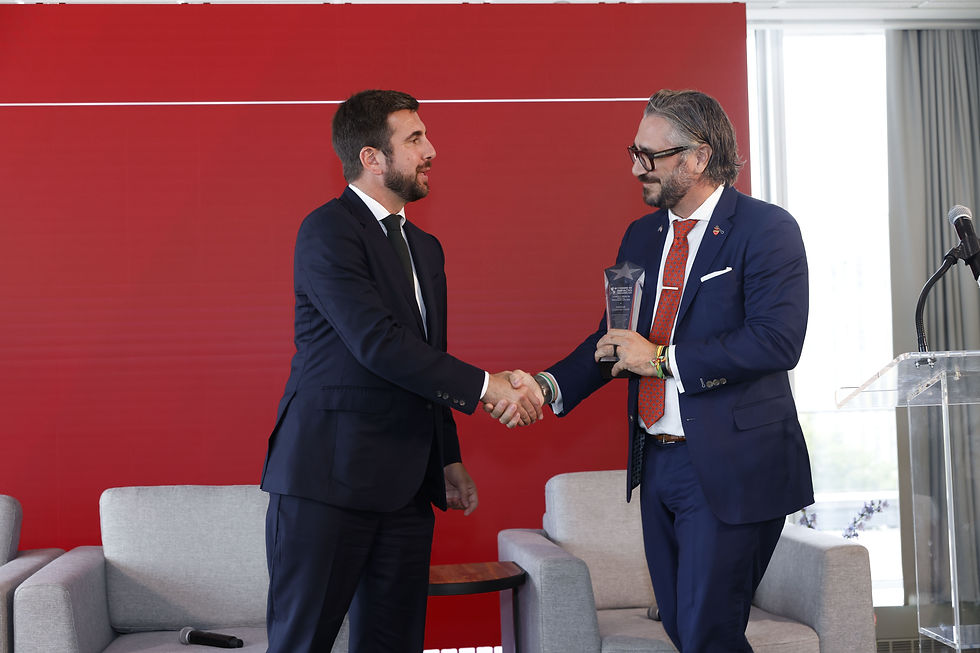
The presentation of the 2026 Iberoamerican Impact Award to Enrique Riquelme Vives, Chairman of COX, was among the defining moments of the day. The award recognizes his business leadership and his commitment to the energy transition, advancing sustainable solutions for a more prosperous and resilient future. Riquelme also spoke at a fireside chat on a just energy transition, moderated by Juan Verde, international strategist and global consultant in sustainability and the green economy.

COX, a global company of Spanish origin specializing in water and energy, was also a key partner of this edition. Its work delivering sustainable infrastructure and solutions across the Americas, Europe, Africa and the Middle East speaks directly to two of the region's central questions: how to accelerate the energy transition, and how to manage a resource as strategic as water efficiently.
"Ten years ago, we launched this Summit so that Iberoamerica would have a platform of its own, in its own language, to advance its priorities and build alliances. Since then, we have convened leaders from government, business, multilateral organizations and civil society to advance shared solutions. This edition reaffirmed the region's potential to lead its own transformation. Our commitment for the next decade is to deepen those alliances and translate them into investment, capacity and tangible opportunities for our communities," said Sergio Fernández de Córdova, Executive President of PVBLIC Foundation.
From Ambition to Action: Energy, Water and Oceans

The energy discussion opened with "From Ambition to Action," moderated by Víctor Malagón, Executive Director of Global Compact Network Colombia, with Juan Verde, International Strategist and Global Consultant specializing in Sustainability and the Green Economy at Álamo Solutions, and María del Mar Whittaker, Corporate Responsibility Director at ABRA Group. The panel explored how to translate ambitious climate goals into concrete investment decisions and business transformation, from mobilizing capital and building new industries to decarbonizing hard-to-abate sectors.
The agenda then turned to water and territory. Francis von Hildebrand, President of Fundación Gaia Amazonas, in conversation with journalist and social entrepreneur Mónica Fonseca, presented the Amazon's "Flying River" and positioned water security as Latin America's next great natural asset.

Oceans and island territories were the focus of a keynote by Gustavo González de Vega, Deputy Minister of Economy and Internationalization of the Government of the Canary Islands (Gobierno de Canarias). The Government of the Canary Islands oversees the administration of the Autonomous Community of the Canary Islands and promotes the archipelago's social, economic, and sustainable development, as well as its international outreach and cooperation. Its support for the Summit and its participation in the program contributed an island and Atlantic perspective, particularly valuable in considering the blue economy as an engine of sustainable growth for the region.

Sport and Culture as Drivers of Identity and Community

Sport and culture occupied a prominent place on the agenda, examined as forces that build community and project identity. Emilio Gutiérrez, Managing Director of Academy and International Development at Club Atlético de Madrid, spoke of sport as a school for life, capable of cultivating talent, values and opportunity. Álvaro de Miguel, Secretary General of the Royal Spanish Football Federation (Real Federación Española de Fútbol), opened the segment on sport, health and social transformation, followed by Eduardo Frisicaro, who presented MagiCup, the initiative he chairs. In the panel "New Engines of Social Transformation," moderated by Ariana Stolarz, General Manager and Global Chief Strategy Officer at Accenture Song, Miguel Espinosa, Executive Chairman of Grupo Nordestada, joined Frisicaro and De Miguel to explore how the impact of sport can extend beyond the field of play to advance inclusion, education and development.

From the creative sphere, Eduardo Lebrija, former Paramount executive, and Manuel Machado, Co-Chairman of CCOM Group, in a conversation moderated by Amira Saim, Content Director of Marketing at Condé Nast Mexico and Latin America, reflected on the power of storytelling to connect markets, generations and communities, and on how Iberoamerican talent can reach new audiences.

Fundación Cajasol, a Spanish non-profit that promotes social, cultural, sports and educational development, with a particular presence in Andalucía, is also part of this space. Its support for the Summit reinforces the principle that the region's social transformation is built through culture, sport and education.
Youth, Inclusion and New Partnerships
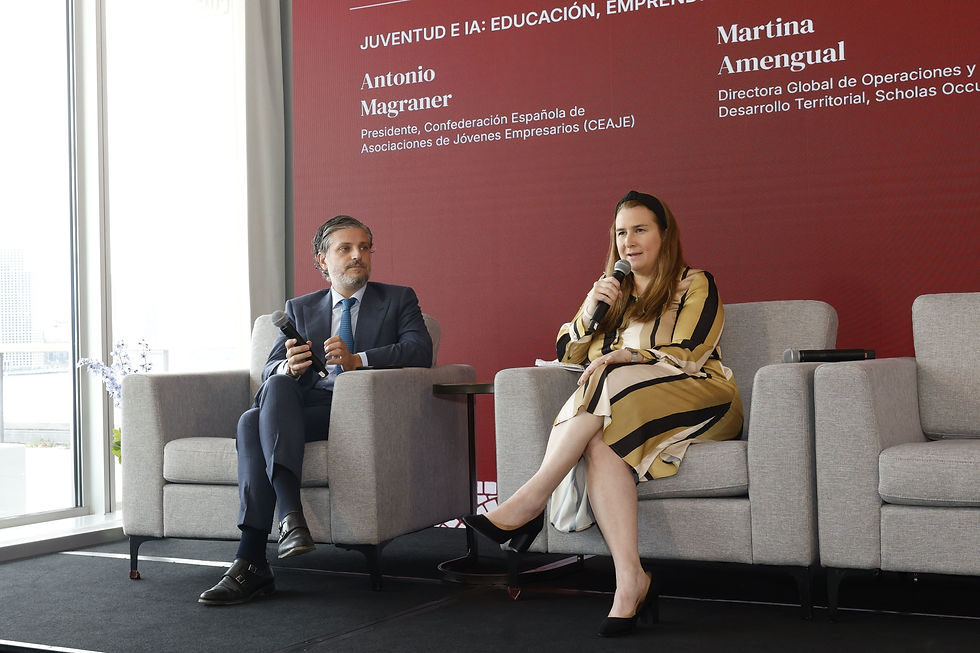
The Summit also placed the next generation at the center of the conversation. Antonio Magraner, President of the Spanish Confederation of Young Entrepreneurs Associations (CEAJE), and Martina Amengual, Global Director of Operations and Territorial Development at Scholas Occurrentes, discussed how to equip young people to learn, start ventures and lead in a world transformed by artificial intelligence: not only to use technology, but to cultivate critical thinking, creativity, responsibility, and a human dimension. The discussion echoed Pope Francis's vision of technology placed at the service of people.
Michelle Ferrari, President of Women Economic Forum Iberoamérica, spoke with Concepción Valadez, PVBLIC Foundation's Special Representative in Mexico, on how leadership, networks and civic participation can build more inclusive societies and turn inclusion into tangible impact.

Cascais lends its support to this pillar of the program. This Portuguese municipality is committed to sustainable development, innovation, and quality of life through initiatives in education, entrepreneurship, citizenship, the environment, culture and international cooperation. Its people-centered local experience and international outlook exemplify the kind of model the region needs.
Financing the Future
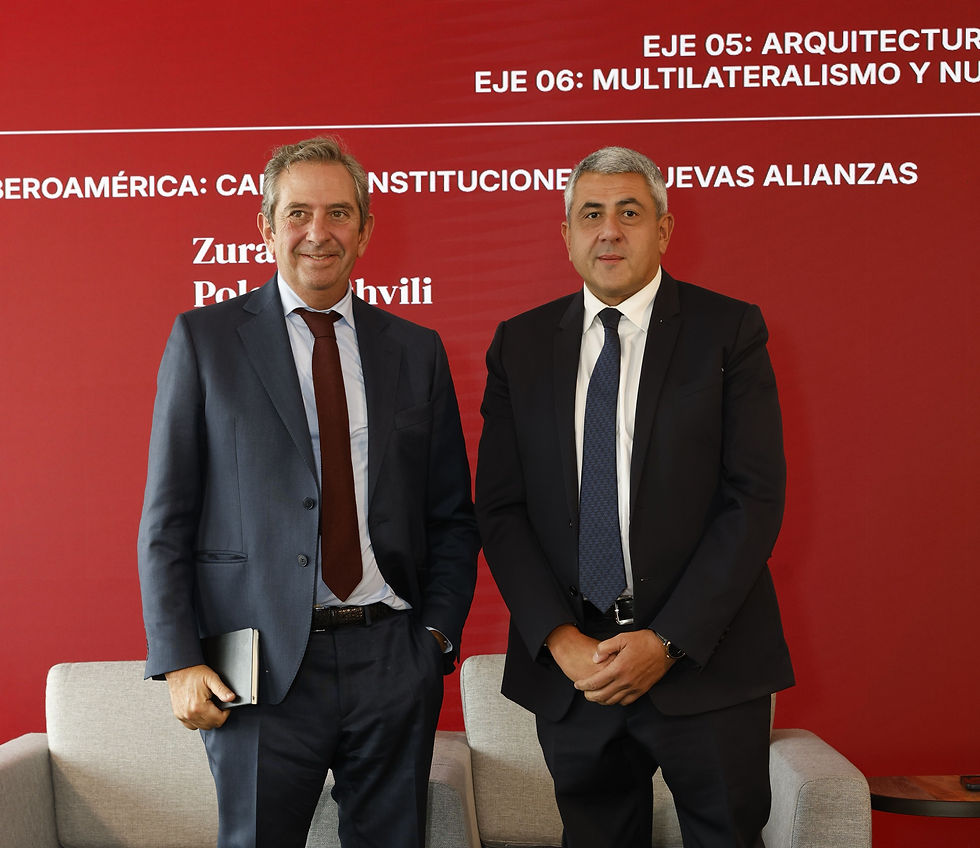
The program concluded with a focus on capital. Íñigo Fernández de Mesa, Chairman of Rothschild & Co Spain, and Zurab Pololikashvili, former Secretary-General of UN Tourism, examined how Iberoamerica can mobilize investment, strengthen its institutions and build the partnerships needed to turn opportunity into concrete projects. Virginia Villar Arribas, Deputy Director of the Private Sector Partnerships Division at the World Food Programme (WFP), delivered the closing keynote, followed by the presentation of the Impact Award and final remarks.


Subway Surfers is an exciting endless runner game where players control a character dashing along subway tracks, skillfully dodging trains, barriers, and countless unexpected obstacles that appear ahead.